

NOVİLAB | Phytopathology
Transition to natural and safe food production with Novichem products.
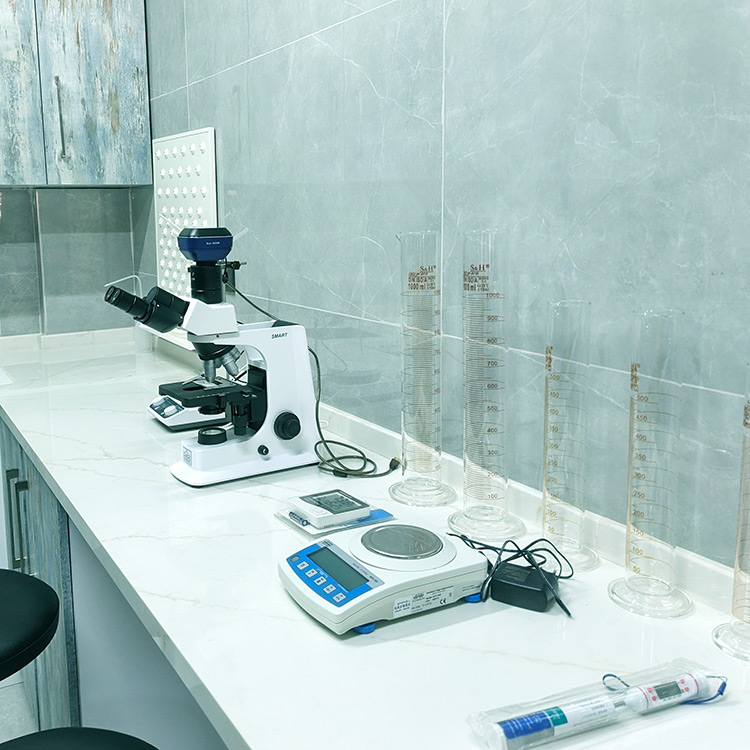
NoviLab Plant Disease and Health Laboratory was established in 2025 by NOVICHEM Plant Extract to provide services in the diagnosis and treatment of plant diseases.
NoviLab not only supports the healthy, strong, and highly productive development of your plants but also always stands by farmers and agricultural professionals in detecting diseases.
Our facility includes Bacteriology, Mycology, and Virology laboratories.
At NoviLab, research projects related to plant health are conducted, and disease and pest diagnosis analyses are also performed on plant samples received from producers in the surrounding provinces.
ANALYSES PERFORMED
- General microscopic diagnosis
- Microscopic diagnosis of insect pests
- Diagnosis with microscope and humidity chamber
- Diagnosis of disease agents from plants
- Diagnosis of disease agents from soil
- Testing and diagnosis of disease agents from seeds
- Field observation and diagnosis
- Educational seminars on plant health
Plants can be damaged by many biotic and abiotic disease agents from the seed stage until they reach harvest.
The accurate and timely diagnosis of diseases, pests, and weeds in crop production is highly important in agricultural production.
The plant health diagnostic laboratory provides services aimed at diagnosing diseases, insect pests, and weeds that cause yield and quality losses in crop production by conducting examinations both in the laboratory and in the field.
Some key points to consider when selecting plants to bring to the laboratory for disease analysis are:
- To ensure proper sampling from the diseased plants to be examined, it is highly recommended that the sample owner contacts the phytoclinic laboratory supervisor before applying for analysis.
- When taking a plant sample, plant parts containing both diseased and healthy plant tissues should be preferred. That is, the sample taken must have both diseased and healthy tissues together (Sampling should especially be done from fresh tissues and plant parts where diseases are likely to have just started).
- Leaf, root, fruit, or tuber samples taken from a plant suspected of being diseased must be of sufficient size and quantity to clearly indicate the problem.
- The sampled specimens should be placed in appropriate bags. Tubers should be put in paper bags; leaf and fruit tissues should be wrapped in paper towels and placed in plastic bags; roots should be cleaned of soil and placed in plastic bags.
- If all samples are put in the same bag, deterioration may occur. Therefore, different plant samples should not be placed in the same bag (For example, when roots and leaves are put in the same bag, the mud or moisture on the roots can cause the leaf samples to rot).
- Diseased plant samples taken for analysis should be delivered to the laboratory as soon as possible.
- Samples must be labeled with the relevant required information (Sample name, location where it was taken, date of sampling, etc.).
